Agentic Engineering for Enterprise
Context, Process, Validation
About Me
- Principal Software Engineer - AI + Fullstack
- Finance, Health, Hiring - FTSE 100 to startups
- Began in data & ML teams
- Build AI systems and consult for enterprises
Outline
- What I've seen
- Why the gains don't show
- System 1: Knowledge corpus
- System 2: Agentic SDLC
- System 3: Validation harness
- Putting it together
What I've Seen
AI in enterprise engineering teams
My experience
- Engineers moving slower than they could
- Confidence, context, validation: whichever is missing, they slow down
- Licences bought, usage invisible
- "Handed out the licences and shut our mouths"
- Review and QA become the bottleneck
Moving Too Fast
Maintainability
Tangled code, checked in unowned
Performance
Breaks at scale
Runtime
Looks right, 500s when QA hits it
QA overloaded
Too much bounces back to fix
High risk
Prod DBs dropped (industry)
The AI Development Spectrum
Enterprise lives at the right end - or should
What Agentic Engineering Unlocks
- Pixel-perfect UI in seconds
- Productive in unfamiliar codebases day one
- Quality, security, architecture improvements
- Compressed timelines: 1mo -> few days
The New Engineering
Old Skillset
New Skillset
Syntax
Architecture
Specific languages
Product-minded engineering
Framework expertise
Taste / craftsmanship
Writing code by hand
Agentic engineering process
Why the Gains Don't Show
It isn't the model
Where are you?
Most rooms are at 2 or 3. This talk is how you get to 4.
Three Gaps
Context
no context, agents misbehave; by hand, high effort; home-grown, never refreshed
Process
no SDLC to work within, so results depend on the engineer
Validation
nothing deterministically proves it still works
Three Systems
Each must be engineered
System 1: The Knowledge Corpus
Agents need what your senior engineers know
"We want the output to feel native to our ecosystem, not something that requires heavy rework to align with our platform conventions."
- software leader, large vehicle manufacturer
~200 engineers, 30 teams, 3 countries
A new senior hire
Same reason: doesn't know your platform
The Problem
- The Problem: AI doesn't know your platform
- Standards, architecture, patterns - not followed
- Templates, packages, services - not reused
- The Solution: a knowledge corpus as a build artifact
Why the obvious fixes fail
- Hand-written docs rot silently
- Search returns deprecated next to current
- A wiki has no contract
- Unreviewed AI docs make agents worse
Context engineering, enterprise edition
One engineer seeds a chat
An enterprise builds a corpus
Three kinds of knowledge
What you WANT
Architecture
Patterns & practices
Standards
What IS
Existing packages
Templates, services
Good example code
What's HAPPENING
Intents, specs, plans
Reports, decisions
Lives with the work
The first two belong to the corpus. The third belongs to the SDLC.
Knowledge you want: curated
- Owned by a person - the enterprise architect
- Any vehicle: Confluence, repo, wiki
- Corpus ingests continuously, keeps it canonical
- Example: one error-handling practice, enterprise-wide
Knowledge of what is: generated
- Docs OF the packages, not API docs
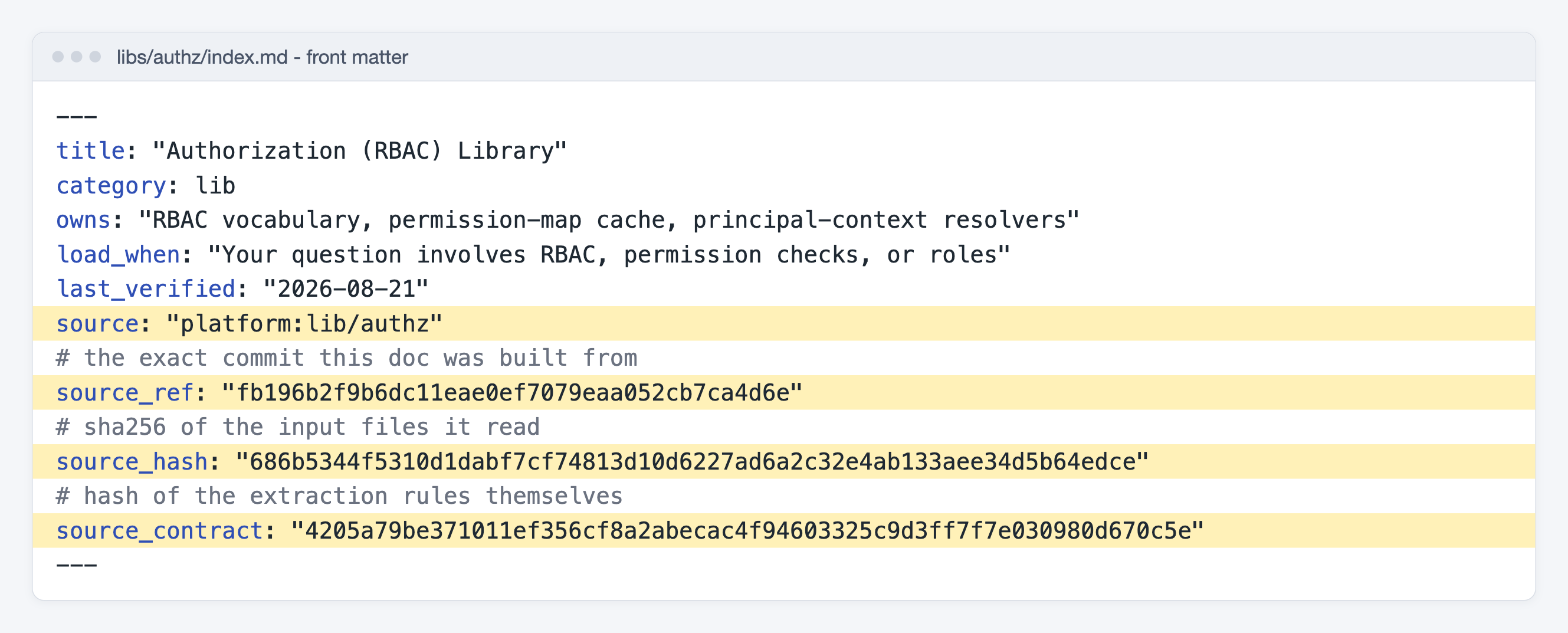
- Validated before merge, stamped with the commit
Keeping it current
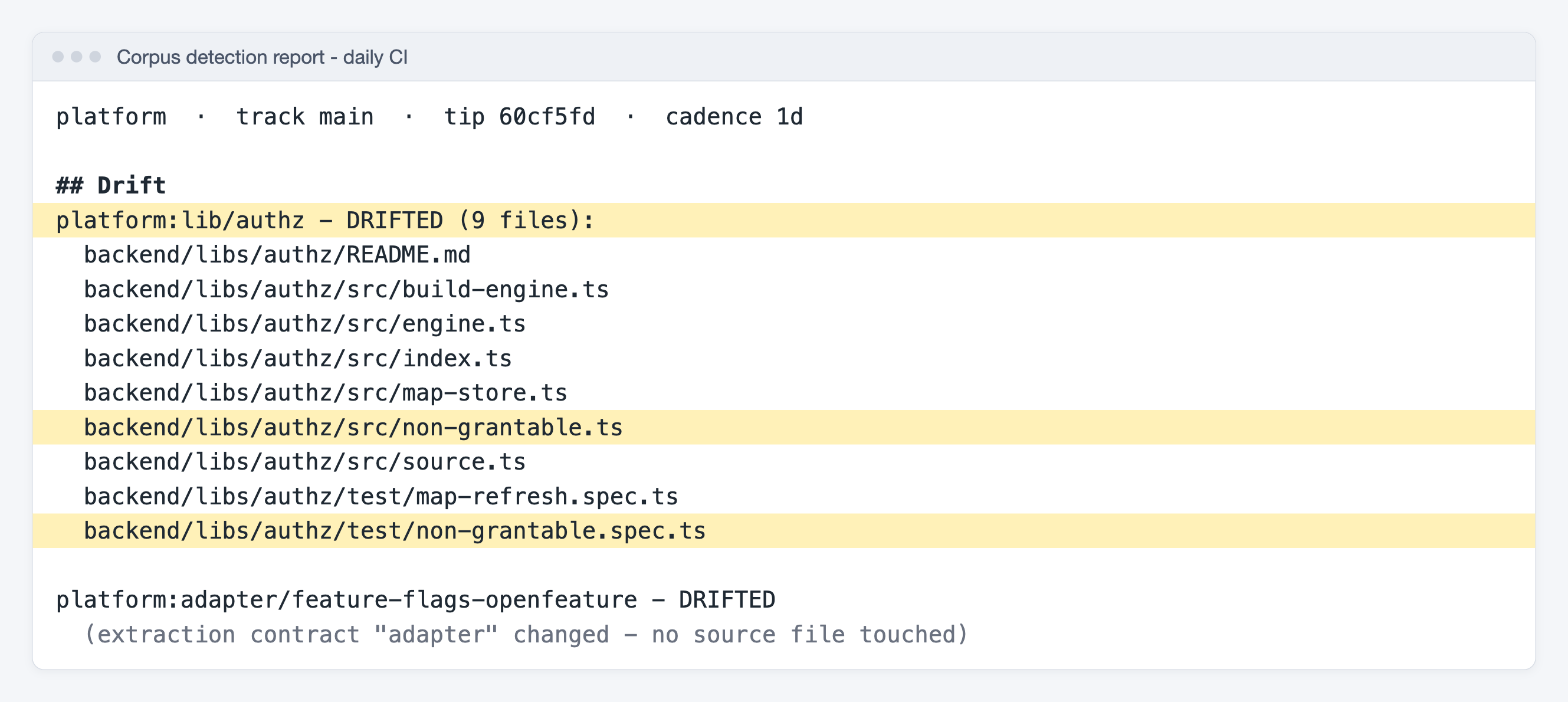
- Generated: mechanical staleness, "these 2 source files changed"
- Not calendar staleness, "this doc is 30 days old"
- Curated: an owner and a review cadence, wherever it lives
What else goes in
- Negative knowledge: when NOT to use it
- Honest gaps: every miss is logged, becomes backlog
How agents reach it
Agents ask for the doc they need. They don't load the platform.
Demo 1/3Every doc knows the exact commit it came from.
Demo 2/3Not "30 days old". These nine files changed.
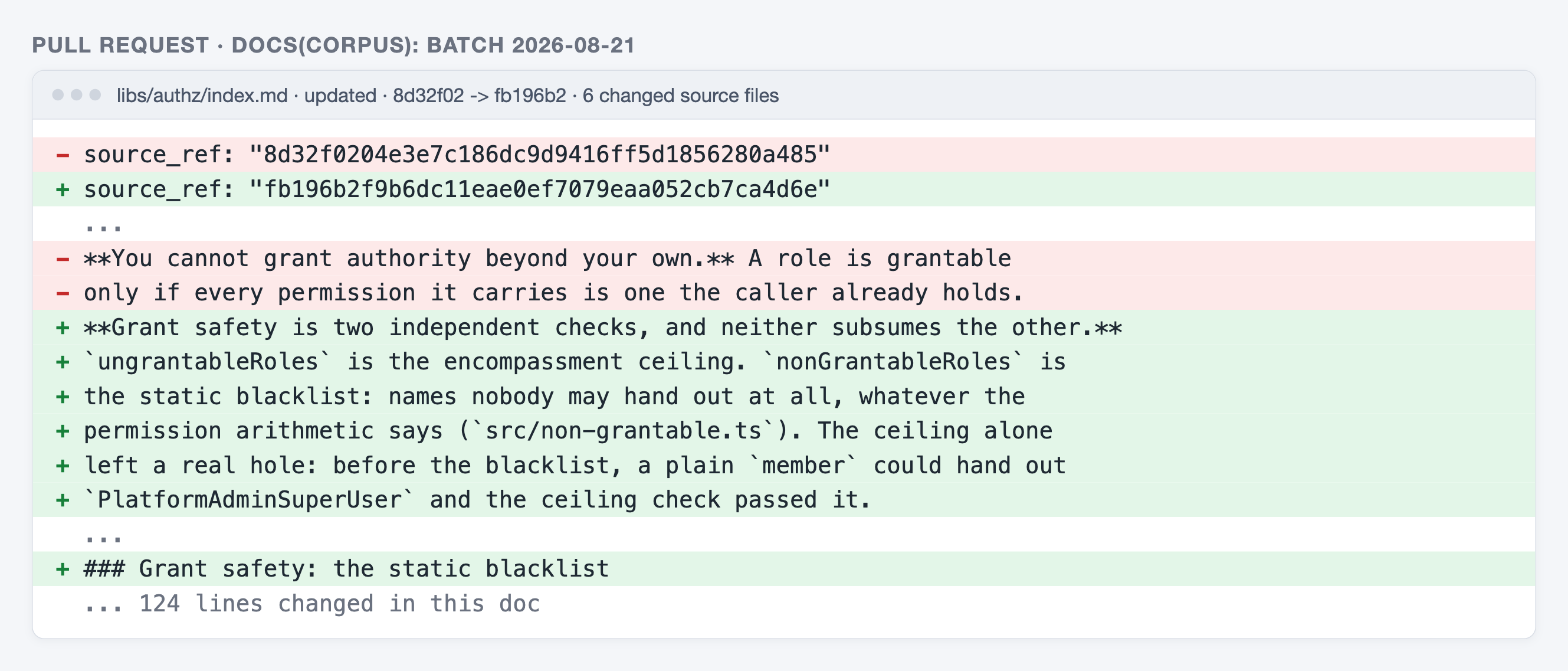
Demo 3/3The agent drafts it. A person merges it.
Case Study: a corpus for a product platform
14services, 75 packages
236REST endpoints
50backend libraries + adapters
50frontend packages
312klines of TypeScript
Every agent now knows how to use all of it
Every doc stamped to its commit. 0 failed checks out of 3,914.
System 2: The Agentic SDLC
Shared rails, for humans and agents
The Problem
- The Problem: everyone starts from scratch
- Best practices under-adopted, nothing shared, no oversight
- Nobody can pick up anyone else's work
- The Solution: agree the rails, not the route
- Where artifacts live, how context is shared, what gets checked
- Don't invent them: start from Anthropic's AI-native SDLC
Where one engineer gets to
- Good. Not all the way
- Every engineer stops somewhere different
- Nothing persists, nothing is checked, nothing is shared
Anthropic's AI-native SDLC
- Every stage commits an artifact; the commit triggers the next stage
- A named human approves each gate
- Agents act up to the production gate, never through it
Intent, spec, plan
Intent
The ask: problem, outcome, who it affects, constraints
Product owner
Spec
The answer: requirements and design, org policies applied as it's written
Product owner, policy owners, tech lead if risky
Plan
The route: files, order, risks, what proof counts as done
Engineer, architect if risky
Each is a committed file. Nobody approves their own.
What you build around it
Four layers. The next slides take each in turn.
Plans cite the corpus
- Every platform decision cites a corpus doc
- No doc? The agent stops and says so
- A review layer audits the citations
Determinism
- Skills advise, hooks enforce
- The stage order is a state machine, not a convention
- Verification always runs, nobody has to remember
Parallel without collisions
- Worktrees - one per agent
- Skills that spin up, merge back, fix conflicts
Oversight and improvement engine
- The chain of commits is the audit trail
- Benchmark before you change a workflow
- Every incident becomes a regression eval
System 3: The Validation Harness
Agents move only as fast as they can check their work
The Problem
- The Problem: AI is a fickle beast
- Can't be trusted to check its own work
- Can't be trusted not to break other things
- Mocks its own code to force a pass
- The Solution: deterministic validation
Your harness sets your pace
The goal: it comes back right the first time, with evidence you can trust.
The layers
Static
Unit
Integration
E2E
Evals
cheapexpensive
- Static: types, lint, format. Seconds. How conventions get enforced
- Unit: logic in-process, nothing external. Seconds
- Integration: real DB, real auth, ephemeral environment, 100% coverage. Minutes
- E2E: a real browser or simulator, clicking the real app
- Evals: only if you ship AI features
Best practices per layer
Static
One check command, zero warnings
Prod build boots on every PR
Unit
Mock only at seams you own
Coverage published, ratchet up
Integration
Ephemeral environment every run, torn down after
100% endpoint coverage, nothing silently skipped
E2E
Retries zero, a flake is a bug
Smoke slice on PR, full suite scheduled
Integration: it runs the thing
Looks right is not works. 500s are found here, not by QA.
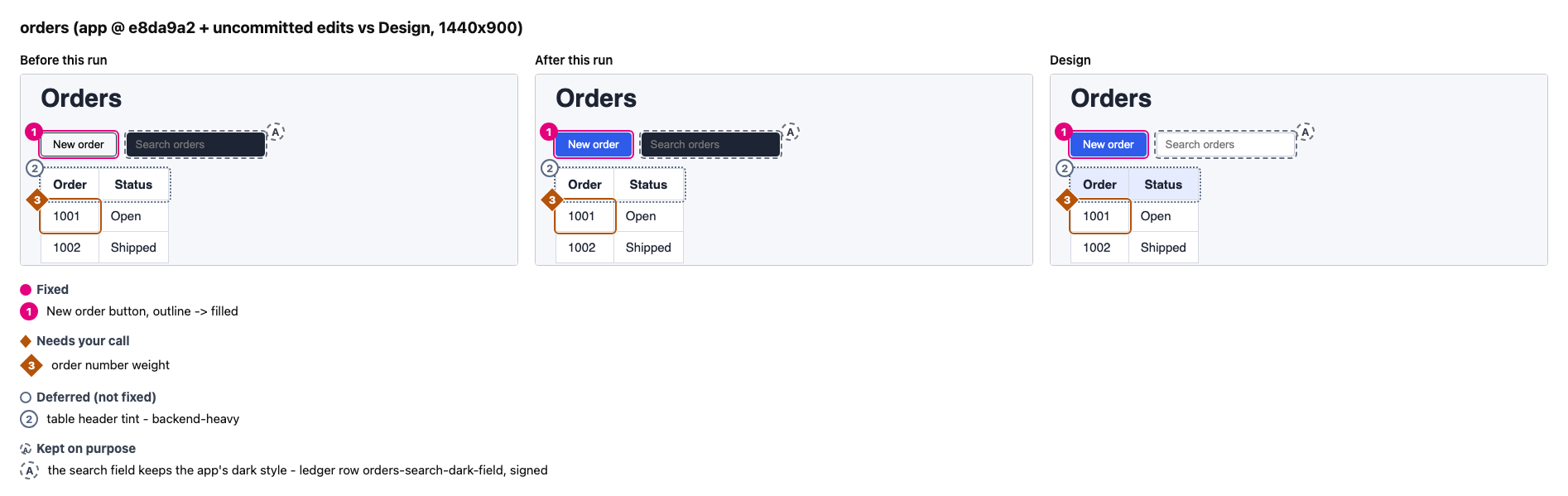
Visual verification
Advisory, never a gate
Visual verification: AI loops until it matches the design
Case Study: a harness you can trust
Consumer app, iOS + Android, with AI features
Static
Types, lint, security scans
Unit
~5,000 tests
Integration
100% coverage, enforced by a gate
E2E
52 flows on a real simulator
Evals
Every AI feature, 400+ goldens
Visual
Screenshots in every report
2xthe scoped features, within the budget
1engineer where the plan had two
0features that come back busted
Putting It Together
Three systems, one loop, and where to start
How they connect
What it feels like
Less human time per build.
It should almost never come back busted.
The goal: work one layer up
- Whole epics go through the system
- You still drive; less intervention per feature
- Scale up as the harness holds
Baseline first
"We have 300 licenses out on GitHub... I heard 1,100 or something the other day. I didn't even know we had that many developers."
The head of AI enablement at a large US health insurer
- Measure DORA before you build anything
- Governance is what makes handing out licences safe
Key takeaways
It isn't the model
Sources
- The AI-native SDLC playbook, Anthropic. claude.com/resources/articles/the-ai-native-sdlc-playbook
- DORA: the four key metrics and the annual State of DevOps reports. dora.dev
- Model Context Protocol, the open standard agents use to reach tools and docs. modelcontextprotocol.io
- Claude Code hooks, how deterministic checks are enforced around an agent. docs.claude.com
- Case studies and quotes: my own client and product work, anonymised